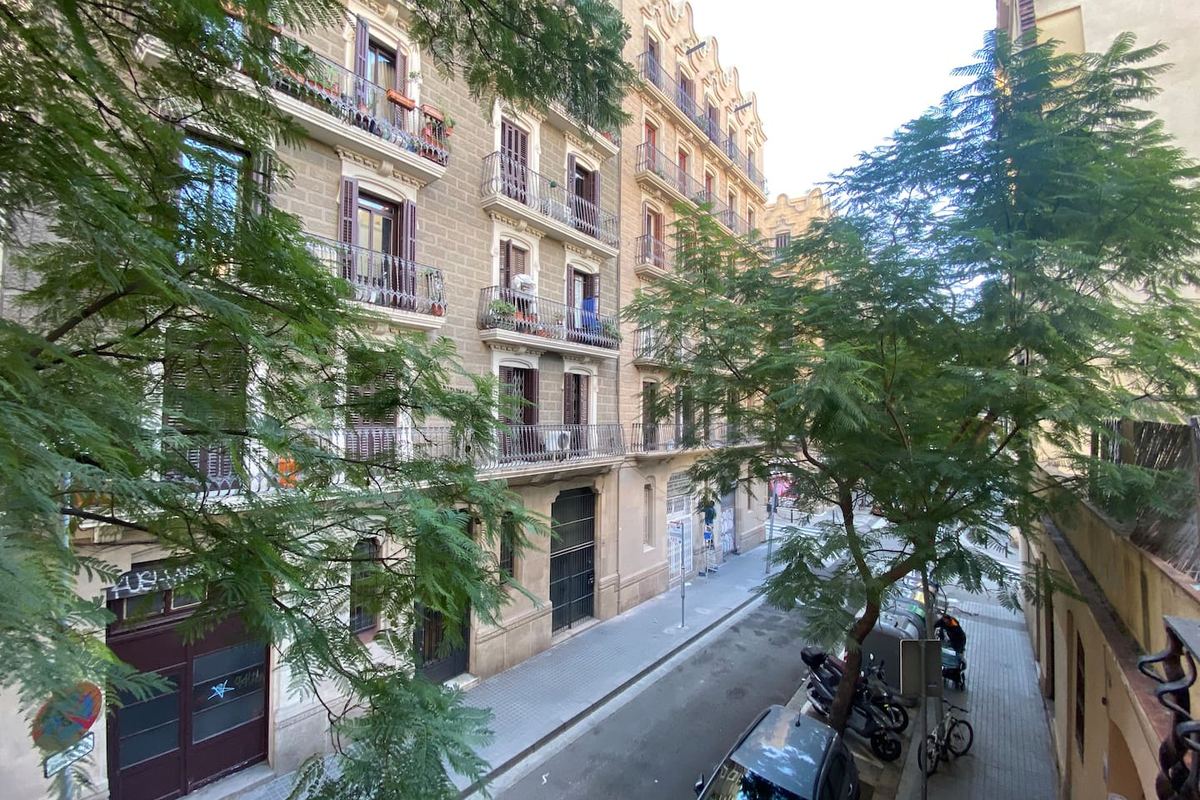
Since 3 October 2026, anyone in Catalonia who rents out or sells a property built before 2002 must provide a certificate confirming whether asbestos is present. This applies to every type of rental, whether short-term, mid-term or long-term. The requirement comes from Law 8/2026 on the eradication of asbestos, and the Catalan Waste Agency has confirmed that short-term rentals are included, even for a one-night stay.
In practice, it involves a single visit: a qualified technician checks what is visible in the property and signs the certificate.
In force, with regulations still to come. The requirement has applied since 3 October. The implementing regulations, which will set out the format of the certificate and who may issue it, have not yet been approved, and neither has the law’s own penalty regime. In the meantime, the Agency’s basic template can be used. We’ll update this guide when the regulations are published.
What is still to come, and when
The Catalan Government has one year from the law’s approval on 2 July 2026 to adopt the regulations (first final provision). Until then, a certificate must state at least three things: whether there is visible asbestos, what condition it is in and what risk it may pose (Article 21.3).
Key points
Before 2002If the building is older, you need the certificate, even if the property has been fully renovated. Every rentalShort-term, mid-term or long-term. A one-night stay is included. A technician’s visitAn architect, technical architect or engineer. A visual inspection, with no samples taken. One certificateIt doesn’t expire and covers every booking, provided there are no relevant changes to the property. You can still rentFinding asbestos does not prevent you from renting. The certificate is for information. PendingThe regulations and the law’s own penalties are still to come.In this guide
Why is asbestos a problem, and why this law?
Asbestos is a mineral that separates into tiny fibres, which can be inhaled if they become airborne. For decades it was used in construction, mainly in fibre cement for roofs, downpipes and ducts. The law itself lists the illnesses it can cause, including lung cancer, mesothelioma and asbestosis (Article 2.f).
Having asbestos in a building does not necessarily mean breathing it in. According to Spain’s National Institute for Safety and Health at Work (INSST), in most cases the material has to be disturbed before it releases fibres, particularly where it is solid, as fibre cement is. As it wears, however, it may release fibres without being touched, and the INSST considers that the point at which it has reached the end of its useful life.
Spain banned asbestos in 2001, with effect from June 2002, but material already in place was allowed to remain until the end of its useful life. According to the law, Catalonia still has millions of tonnes of fibre cement, much of it installed between the mid-1960s and the late 1980s, and it is now reaching that point. Law 8/2026 therefore aims to locate it and remove it gradually, in line with the European goal of eliminating it completely by the end of 2032.
The certificate is the part that concerns you as a landlord. It lets the person moving in know whether there is visible asbestos and what condition it is in.
What does the asbestos law require when you rent out a property?
Law 8/2026 of 2 July on the eradication of asbestos was published in the Official Gazette of the Government of Catalonia (DOGC) on 3 July and came into force on 3 October 2026. Its aim is to locate and remove the asbestos that remains in buildings across Catalonia. For landlords, the key provision is Article 21:
‘1. The certificate of the presence or absence of asbestos is the specific document that reports on the presence or absence of asbestos in a property at the time it is issued. This certificate fulfils the information obligation established by this law.
2. The certificate of the presence or absence of asbestos must be provided when a property is sold or rented out, without prejudice to checking the data held in the Catalan Census of Asbestos-Containing Materials.’
Article 21 of Law 8/2026 on the eradication of asbestos (our translation)The law frames this as a right of the buyer or tenant (Article 5.d): to know whether there is visible asbestos, what condition it is in and what risk it may pose. The certificate itself does not require any building work. We explain below what happens if asbestos is found.
Which properties and rentals are affected? The 2002 cut-off
The law refers to any sale or rental. The Catalan Waste Agency (Agència de Residus de Catalunya, ARC), which applies the law, has set out its scope in its certificate template and in its published Q&As, last updated on 16 October:
| Your property | Certificate |
|---|---|
| In Catalonia, in a building constructed before 2002, let as a short-term rental. | Yes |
| The same property, let as a mid-term or long-term rental. | Yes |
| Built before 2002 and fully renovated. The renovation does not change the building’s date. | Yes |
| Built before 2002, with the asbestos already removed. Records of the removal will help the technician. | Yes |
| A former commercial unit converted into a home. What counts is the age of the building, not the date of the change of use. | Yes |
| Built in 2002 or later. | No |
| In Madrid or another region of Spain. This is a Catalan law. | No |
The 2002 cut-off is not in the law itself. The ARC uses it because that was the year Spain banned the sale of asbestos-containing materials, under an order that came into force on 14 June 2002. You’ll find the year of construction in your title deeds or on the Spanish Cadastre’s website (Sede Electrónica del Catastro), by searching for the property’s address or cadastral reference.
What about short-term rentals with stays of just a few nights? The ARC addresses this directly:
‘Yes. Article 21.2 of Law 8/2026 states that the certificate of the presence or absence of asbestos must be provided when a property is sold or rented out, without establishing a specific exclusion for tourist-use dwellings or depending on the length of the rental.’
Catalan Waste Agency, Q&As, no. 41 (translated from Catalan)The same applies to tourist apartments (AT) and to mid-term rentals, as well as long-term residential lets. In each case a property is being rented out, which is what the law covers.
What is your responsibility, and what is your property manager’s?
The obligation rests with the owner. According to the ARC, the owner must ensure that the requirements the law places on property owners are met. Where a management company looks after the property, its role depends on what it does in each case, and Article 12 gives it specific duties.
Arranges and provides it
Commissions the certificate, pays for it and provides it to the tenant or guest. If asbestos is found, takes the necessary steps (Article 11).
Assists and oversees
Helps you obtain it and makes sure it is provided. Tells you if it becomes aware of asbestos and keeps you informed about any grants (Article 12).
Inspects and signs
Visits the property, checks what is visible and accessible, and signs the certificate.
If we manage your property, we can coordinate the process for you (see how we can help). The owner remains responsible for the cost and for meeting the legal requirement.
Who can sign an asbestos certificate, and what does it cover?
Until the regulations are approved, the certificate may be signed by architects, technical architects, engineers and technical engineers, each within their area of competence (the professions listed in Law 38/1999 on building regulation). A health and safety technician cannot sign it, even one who specialises in asbestos. Nor can you, as the owner.
The technician must visit the property in person. They inspect the spaces and elements they can access and record what they see. No samples are taken and nothing is sent to a laboratory. The ARC’s basic template fits on a single page and includes:
- the property details, including the address, cadastral reference and year of construction or renovation;
- who carried out the inspection and when;
- the result, which states whether any elements that may contain asbestos are visible and, if so, whether they are in good or poor condition (damaged and shedding material);
- a disclaimer stating that it only covers what was inspected and visible, and does not rule out hidden materials.
A certificate showing no visible asbestos does not guarantee that there is none behind a false ceiling or inside a wall. If asbestos is found later, that alone does not make the certificate incorrect. The greatest risk lies in materials that are in poor condition or handled carelessly, such as the fibre cement mentioned in the template itself.
Your property, not the whole building. If you rent out a single home, the certificate covers that home only. It does not need to include communal areas such as the roof, façade or downpipes. A building inspection report (ITE) that mentions asbestos cannot be used instead, and nor can the information in the Catalan Census of Asbestos-Containing Materials.
When should you provide it, and how long is it valid?
You must have it before the contract is agreed. At present, it does not need to appear in your Airbnb or Booking.com listing. For a short-term booking, the contract is agreed when the booking is made, so the certificate must already be in place.
The wording of the law is broader than the ARC’s current guidance. Article 10.h, among the duties of those who work with asbestos, calls for information on its presence or absence ‘in any offer, promotion or advertising for the sale or rental of homes’. For now, the ARC does not require it in listings. If the regulations change this, we’ll update this guide.
One certificate for every booking
At present it does not expire. It covers future rentals, provided there are no relevant changes to the property.
A new one if the property changes
If asbestos listed in the certificate is removed, the next rental needs a new certificate. The same logically applies after works that affect what was certified.
One document
A single certificate can cover several homes, provided each one is identified and inspected and its result is shown separately.
What happens if asbestos is found?
You can still rent the property out. The ARC’s guidance is clear: a certificate showing elements that may contain visible asbestos ‘does not, under any circumstances, prevent the sale or rental of the property’. The certificate is for information.
That doesn’t mean nothing needs to be done. Once asbestos has been identified, the law requires owners not to disturb it and to take the necessary steps to remove it (Article 11, points a and d). Only authorised companies and professionals may remove it (Article 31). Removal deadlines are set by the competent authorities rather than by this law (fourth additional provision).
- In good condition: leave it alone, avoid drilling or sanding nearby, and ask an authorised company what to do and when.
- In poor condition, shedding material: please arrange for it to be assessed promptly. This is when it is most likely to release fibres.
- The Catalan Census: reporting asbestos to it is not yet compulsory. The channels for doing so will come with the regulations.
- Grants: the law creates a fund for the eradication of asbestos and provides for grants towards its removal (Articles 23 and 26). When calls for applications open, we’ll let our owners know.
What if you don’t have a certificate? Penalties and bookings
Failing to provide the certificate when required is a minor offence (Article 53.c). The law sets a fine of €100 to €3,000 for it (Article 54.1.a), but that part of the penalty regime is not yet in force. It will apply once the Catalan Government approves the decree that develops it. Until then, the general environmental penalty rules apply (seventh final provision).
What about the booking itself? The law does not say what happens to a contract agreed without a certificate. It does not make the contract void, but there may still be consequences for failing to provide the certificate. The sensible course is to obtain one as soon as possible.
Property managers are also accountable for their part. Failing to inform owners and tenants about asbestos in the properties they manage is another minor offence (Article 53.b).
What is still unclear?
- The regulations. They must set out the format of the certificate and who may issue it, by July 2027. It is not yet known whether current certificates will need to be reissued.
- The law’s own penalties. These will arrive with the decree that develops them.
- Listings. The law refers to providing information in advertising (Article 10.h). For now, the ARC does not require it.
- Bookings made before 3 October for stays after that date. This has not been clarified.
- The Q&As are not law. They reflect the ARC’s interpretation. It is the ARC that says the requirement covers short-term stays, while the law simply refers to renting out a property. As the ARC is the body that applies the law, its interpretation is the one we follow.
What should you do now?
- Check the building’s age In your title deeds or on the Cadastre’s website. If it was built in 2002 or later, you don’t need a certificate.
- Gather what you have Records of asbestos removal, an ITE report or a previous certificate. They don’t replace the certificate, but they help the technician.
- Commission the certificate From an architect, technical architect or engineer. Ask for a quote that includes the visit and the certificate. If you own several properties, ask whether one certificate can cover them all.
- Prepare for the visit Make sure the technician can access the whole property. Anything they cannot see will be excluded from the certificate.
- Keep it and provide it To the tenant or guest, before the contract is agreed.
- If asbestos is found Don’t disturb it. If it is in poor condition, ask an authorised company to assess it promptly.
Frequently asked questions
Is it required even if I only rent for a few nights at a time?
Yes, if the property was built before 2002. The ARC states that the law does not exclude tourist-use dwellings and makes no distinction by length of stay.
Does it apply to HUTs or only to tourist apartments (AT)?
Both. It also applies to mid-term and long-term rentals.
Is there a deadline?
There is no transition period. The requirement has applied since 3 October 2026 and covers every contract agreed since then. We recommend obtaining the certificate as soon as possible.
Is it a simple process, or will I need building work?
The certificate itself involves no building work, just a technician’s visit and a document. If asbestos is found, then depending on its condition, removal will need to be planned with an authorised company, and promptly if it is in poor condition.
Do I need a new certificate for every booking?
No. One certificate covers them all (see how long it is valid).
My flat has been renovated and looks brand new. Is it exempt?
No. What counts is the year the building was constructed, not the date of the renovation.
Can I sign it myself?
No. It must be signed by an architect, technical architect, engineer or technical engineer, after a visit to the property.
Do I need to include it in my Airbnb or Booking.com listing?
Not at present. You only need to have it before the contract is agreed. The law refers to providing information in advertising (Article 10.h), so this may change with the regulations.
How much does it cost?
There is no official fee. Ask for a quote that includes the visit and the certificate. If you own several properties, a single certificate covering them all may work out better value.
Can I use the building’s ITE report instead?
No, even if it mentions asbestos. It can, however, give the technician useful information.
What about asbestos in the building itself, such as the roof or downpipes?
Your property’s certificate doesn’t cover it. That is a matter for the owners’ association, and the building’s administrator must inform owners of any asbestos they are aware of (Article 12.a).
Can a guest waive their right to receive it?
The ARC says that obtaining the certificate is a right and, like any right, it can be exercised or waived. We wouldn’t rely on this as a shortcut. The law makes providing it the rule.
Does it apply to properties in Madrid?
No. This is a Catalan law and applies only to properties in Catalonia.
Sources
- Law 8/2026 of 2 July on the eradication of asbestosDOGC no. 9699, 3 July 2026, and BOE no. 201, 17 August 2026. Consolidated text (in Spanish). Articles 5, 10, 11, 12, 21, 23, 26, 31, 53 and 54; fourth additional provision; first and seventh final provisions.
- Catalan Waste Agency: basic template for the certificate of the presence or absence of visible asbestosIn Catalan. The pre-2002 criterion and the professionals who may issue the certificate.
- Catalan Waste Agency: Q&As on the certificateIn Catalan. Updated 16 October 2026. Questions 1–3, 9–12, 14–20, 23–25, 29–32, 37 and 39–43.
- Catalan Waste Agency: publication of the basic templateIn Catalan. 30 September 2026.
- Order of 7 December 2001 amending Annex I to Royal Decree 1406/1989BOE no. 299, 14 December 2001 (in Spanish). Asbestos ban from 14 June 2002.
- National Institute for Safety and Health at Work (INSST): technical FAQs on asbestosIn Spanish. When asbestos-containing materials release fibres and when they have reached the end of their useful life.
- Law 38/1999 of 5 November on building regulation (Ley de Ordenación de la Edificación)Consolidated text (in Spanish). The professions that may sign the certificate until the regulations are approved.
Please note. This guide is for general information only. It is based on Law 8/2026 as consolidated in the BOE and on the Catalan Waste Agency’s Q&As updated on 16 October 2026. It is not legal advice. If you are unsure about your situation, please consult your lawyer or a qualified technician.
If we manage your property, we can coordinate the certificate for you
- We arrange the visit with the technician we work with.
- If you own several properties, we combine the visits into one certificate.
- We send you a quote before anything is commissioned.
Not working with us yet? We’ve managed short-term and mid-term rentals in Barcelona for 16 years.